









































1 min read
How AI Is Changing Cybersecurity Defense
Artificial intelligence is transforming nearly every industry, and cybersecurity is no exception. As cyber threats become more sophisticated and...

Tailored consulting, engineering, and managed security services to meet your needs.
Discover who we are, what drives us, and how Cortrucent partners with businesses to deliver lasting security and technology success.
Explore Cortrucent’s latest insights, industry updates, and expert resources to strengthen your cybersecurity and IT strategy.
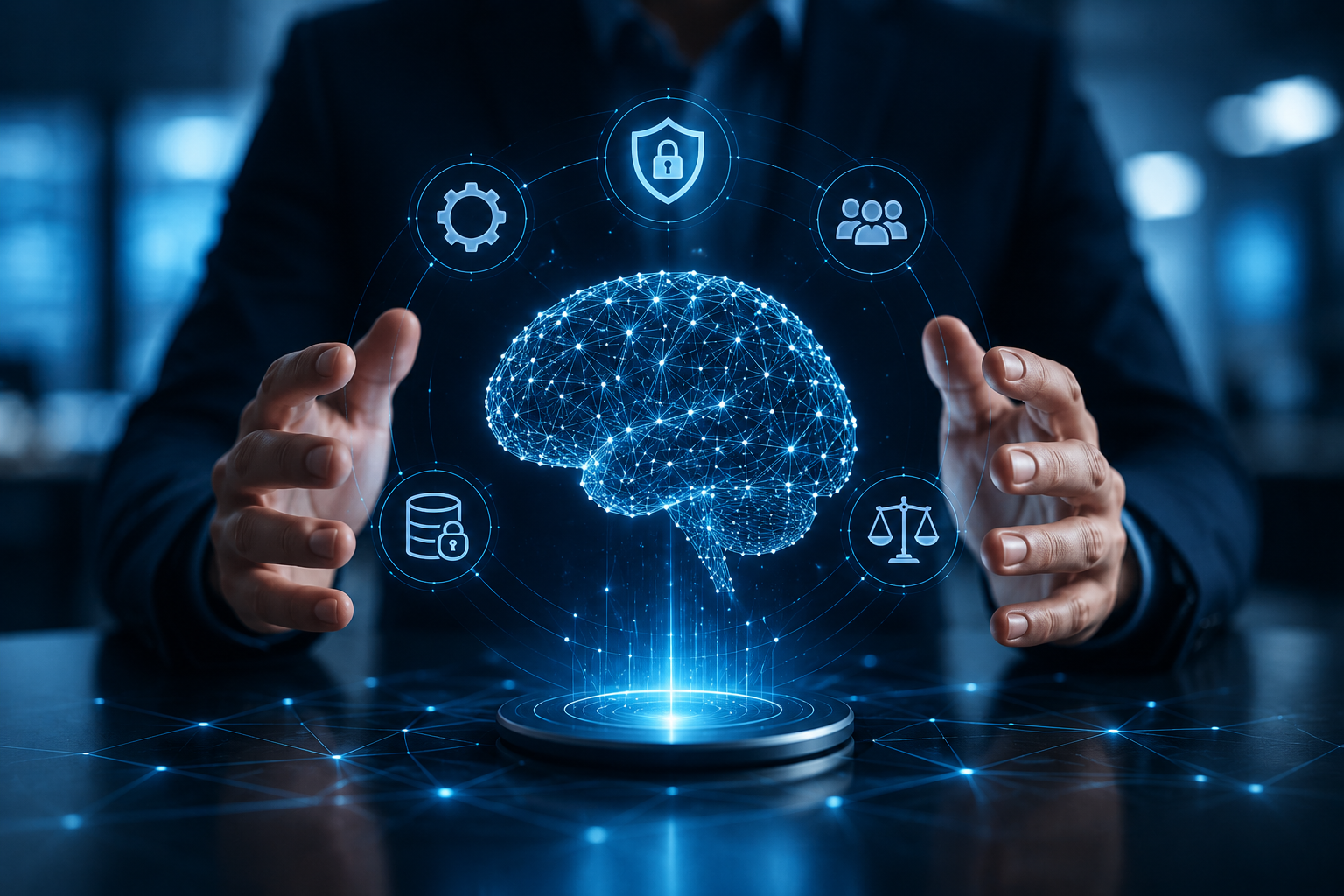
Artificial intelligence is rapidly transforming the workplace.
Employees are using AI tools to draft emails, analyze data, generate content, write code, and streamline everyday tasks. In many organizations, AI adoption is happening faster than leadership can track.
While these technologies offer significant benefits, they also introduce new risks that many businesses are not prepared to manage.
Just a few years ago, organizations rushed to develop cybersecurity policies as cyber threats became more sophisticated. Today, a similar shift is occurring with artificial intelligence.
The reality is simple, every organization needs clear guidelines for how AI can and should be used within their business.
AI tools are becoming part of everyday business operations.
Employees can access powerful AI platforms in seconds, often without involving IT or security teams. While these tools can improve efficiency and productivity, they can also create blind spots for organizations that lack clear policies and oversight
Without governance, employees may unknowingly:
Many organizations have cybersecurity policies that define how employees should handle company data. However, far fewer have established guidelines for AI usage.
This gap is creating new risks across industries.
One of the biggest challenges organizations face is understanding where their data goes once it is entered into an AI platform.
Employees may not realize that entering information into an external AI tool could expose:
While AI platforms continue to improve their privacy and security controls, organizations must still establish rules around what information can and cannot be shared.
An AI policy helps ensure employees understand these expectations before a mistake occurs.
As AI generated content becomes more common, questions around ownership and intellectual property continue to grow.
Organizations should establish clear guidelines regarding:
Without clear policies, businesses may face uncertainty around ownership, quality control, and intellectual property protection.
An effective AI policy helps organizations maintain consistency while reducing legal and operational risk.
Governments and regulatory bodies are paying closer attention to artificial intelligence.
As AI adoption grows, organizations may face increasing requirements related to:
Businesses that wait for regulations to force action may find themselves scrambling to catch up. Establishing governance now can help organizations adapt more effectively as requirements continue to evolve.
Many AI tools are provided by external vendors.
As organizations adopt new AI platforms, they must evaluate the security, privacy, and risk practices of those providers just as they would any other technology vendor.
Questions organizations should consider include:
AI governance should include vendor risk management as part of the decision making process.
Not long ago, cybersecurity policies were often viewed as optional administrative documents.
Today, they are considered a fundamental part of managing business risk.
AI policies follow a similar path.
Organizations that establish clear expectations for AI usage can better protect sensitive information, reduce compliance risks, and support responsible innovation. Those that fail to create guidelines may find themselves facing preventable security, legal, and operational challenges.
The goal is not to limit innovation. The goal is to ensure AI is used safely, responsibly, and in alignment with business objectives.
Artificial intelligence is creating new opportunities for organizations across every industry.
However, with those opportunities come new responsibilities.
As AI becomes more deeply integrated into business operations, organizations can no longer rely on informal guidance or individual judgment alone.
Just as cybersecurity policies became essential for managing digital risk, AI policies are becoming essential for managing the risks associated with emerging technologies.
The organizations that establish clear AI governance today will be better positioned to innovate confidently, protect sensitive information, and navigate the evolving regulatory landscape of tomorrow.
1 min read
Artificial intelligence is transforming nearly every industry, and cybersecurity is no exception. As cyber threats become more sophisticated and...

1 min read
Artificial intelligence is changing the way people work, communicate, and interact online, but it is also creating new opportunities for...
1 min read
Artificial intelligence is rapidly transforming cybersecurity in 2026. What started as a productivity tool for businesses has quickly become both a...